

Childhood Constipation Treatment in Indore may involve prescribed stool-softening medicine, a relaxed toilet routine, and suitable dietary changes after a medical assessment. The right approach depends on the child’s age, symptoms, and whether stool has built up in the bowel.
For parents, the first clue may be a child refusing the toilet, complaining of tummy pain, or repeatedly staining their underwear. These experiences can be upsetting, but a calm response helps children talk about what is happening.
Dr. Sumit Kumar Singh at CHILD GASTRO CARE can assess your child’s bowel concerns and discuss an individual care plan. Understanding the pattern is the starting point for deciding what support is needed.
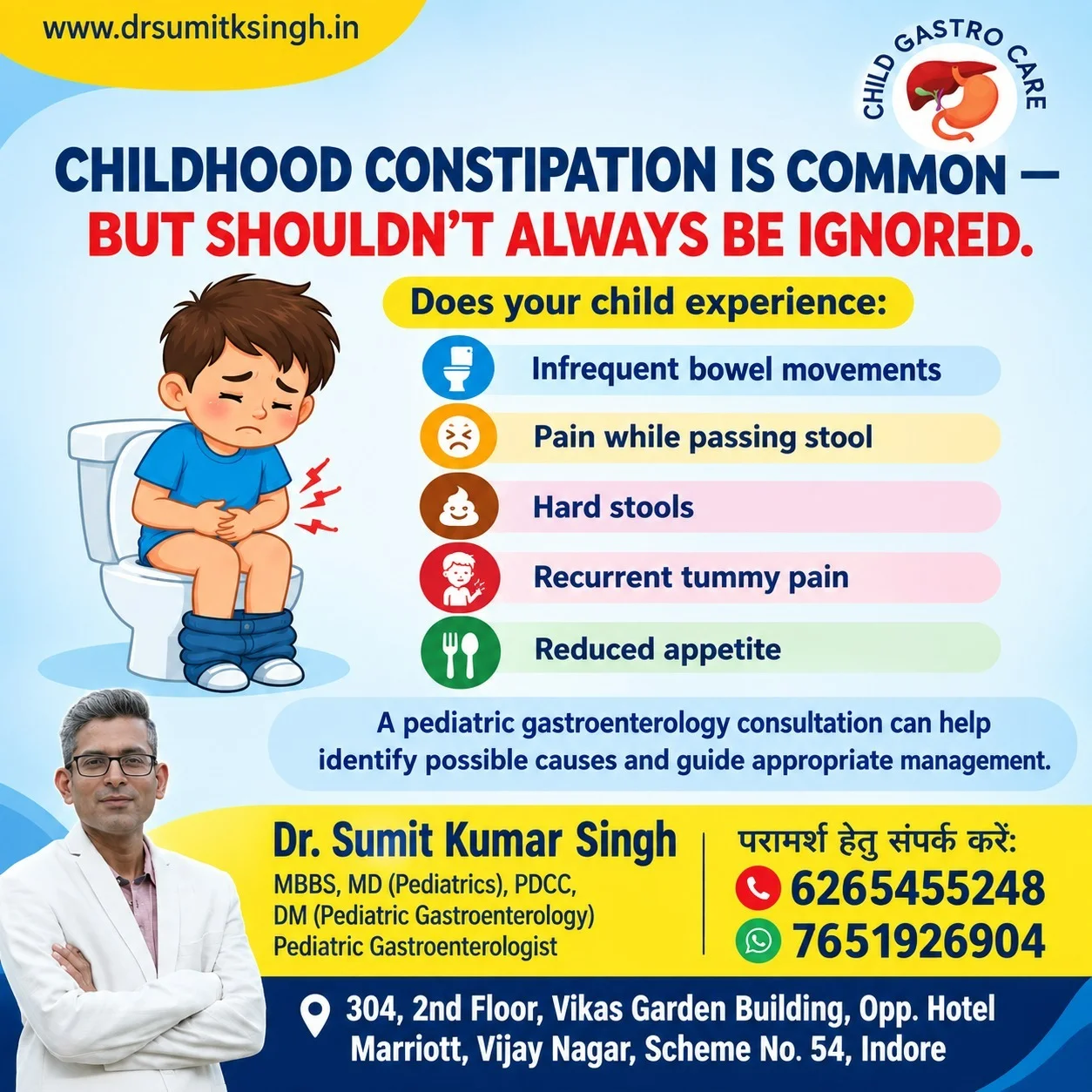
Constipation in children is about more than counting the days between bowel movements. Stool consistency, discomfort, and difficulty emptying the bowel matter too.
Signs worth discussing with a doctor include:
Some children pass small amounts frequently while still having retained stool. Keeping a brief record of what happens is more useful than assuming that frequent toilet visits rule out constipation.
One common factor is stool withholding. After a painful bowel movement, a child may try to avoid the next one. While stool remains in the bowel, more water is absorbed from it, making it harder to pass. The next painful experience can reinforce the fear.
A child might also avoid unfamiliar school toilets, feel rushed during toilet training, or postpone going because play feels more important.
Low fibre intake, inadequate fluids, changes in routine, and certain medicines can contribute. However, constipation can occur even when a family follows healthy habits. Persistent symptoms deserve assessment without blaming either the parent or the child.
A consultation usually begins with questions about when symptoms started, stool appearance, pain, toilet habits, and previous treatment. The doctor may also review feeding, growth, medicines, and relevant medical history.
Examination helps assess abdominal swelling, tenderness, and other findings. Most straightforward cases can be diagnosed from the history and examination. Scans and extensive testing are not routinely needed.
Further investigations may be appropriate when symptoms suggest an underlying condition or when treatment is not producing the expected improvement.
For families seeking pediatric constipation care in Indore, describing the whole pattern—including withholding and underwear accidents—helps the clinician understand concerns that a stool-frequency count alone may miss.
Arrange an appointment for recurring painful stools, repeated withholding, ongoing soiling, or symptoms that are not improving.
Seek urgent medical attention for severe or persistent abdominal pain, marked abdominal swelling with vomiting, or a child who appears seriously unwell. Green vomit needs immediate assessment.
Blood in the stool, poor growth, weight loss, or constipation beginning in the first weeks of life also require prompt medical review. Although hard stools can sometimes cause a small tear and bleeding, parents should not assume this explains every episode.
For serious symptoms, use emergency services rather than waiting for a routine clinic appointment.
Some children develop faecal impaction, meaning a significant amount of stool has accumulated and become difficult to pass. A clinician may recommend treatment to clear this before starting an ongoing maintenance plan.
Adding fruit or encouraging another toilet attempt may not resolve an established build-up. Follow the prescribed instructions and ask what changes to expect during treatment.
An age-appropriate oral laxative may be prescribed to help stools pass more easily. The medicine, dose, and duration should be selected for the individual child.
Do not give laxatives, enemas, or suppositories without medical advice. Tell the doctor about medicines and remedies already being used so the plan can be reviewed safely.
The aim of child constipation treatment is sustained, comfortable bowel movements. Passing one stool does not necessarily mean the problem has fully settled.
For a child who is developmentally ready, regular, unhurried toilet sitting after meals can help establish a routine.
Support their feet on the floor or a stable footrest. Offer encouragement for participating, even when no stool is passed. Avoid punishment, pressure, or prolonged forced sitting.
Ask whether school toilets feel uncomfortable or inaccessible. A practical conversation with the school may help a child who routinely holds stool until reaching home.
An age-appropriate, balanced diet supports bowel health. Depending on the child’s feeding stage, familiar options may include:
Introduce dietary changes gradually. A sudden large increase in fibre can cause discomfort, and more fibre is not always the answer when intake is already adequate.
Offer appropriate fluids regularly and ask the clinician about your child’s needs. For babies, seek advice before changing milk feeds or introducing constipation remedies.
Fibre-rich foods and adequate fluids support treatment, but established constipation often needs medical care alongside these measures. Avoid removing whole food groups without professional guidance.
Children may need treatment for weeks or months, particularly when constipation has been present for a long time. Follow-up allows the doctor to review stool consistency, pain, withholding, accidents, and progress with toilet habits.
Do not stop prescribed treatment simply because the first few bowel movements improve. Ask when and how medicines should be reduced.
Before the appointment, note stool patterns, symptoms, and treatments already tried. Bring previous prescriptions and relevant reports. A short diary can make it easier to explain both improvements and setbacks.
Not necessarily. Normal patterns vary. Hard or painful stools, withholding, and difficulty emptying the bowel can be more informative than frequency alone. Discuss a persistent change with a doctor.
Adequate fluids are helpful, particularly when intake is insufficient. However, extra water alone may not resolve stool retention or ongoing constipation. Some children also need prescribed treatment and changes to toilet routines.
Softer stool can leak around retained hard stool, causing overflow soiling. This is usually involuntary. It needs assessment and support, rather than scolding or an assumption that the child has ordinary diarrhoea.
Clinicians commonly use appropriate laxatives to treat childhood constipation. Suitability depends on the child, the product, and the treatment plan. Follow the prescription and arrange review if symptoms persist or concerns arise.
There is no single recovery timeline. Longstanding constipation may need several months of care. Regular review helps guide treatment adjustments and a gradual reduction in medicine when appropriate.
Repeated painful toilet visits deserve attention. If you are looking for Childhood Constipation Treatment in Indore, consult Dr. Sumit Kumar Singh at CHILD GASTRO CARE to discuss your child’s symptoms, previous treatment, and next steps.
Contact Us today to check appointment availability and take the next step towards more comfortable bowel habits for your child.
We Provide Our Services In Indore, Mhow, Dhar, Dewas, Ujjain, Harda, Hatod, Neemuch, Mandsaur, Pithampur
child gastroenterologist in Indore | Child Bleeding Treatment in Indore | Child Blood In Stool treatment In Indore | Child Abdomen Pain treatment In Indore | Child vomiting treatment In Indore | Child Anamic treatment In Indore | Child Foreign Body Ingestion treatment In Indore | Child Blood In Stool treatment In Indore | Child Colonoscopy treatment In Indore | Child Short Height Treatment in Indore | Child Polyp Treatment In Indore | Paediatric Gastroenterologist Doctors in Indore | Pediatric Anemia Treatment Doctors In Indore | Treatment For Child Bleeding in Indore | Doctors For child Bleeding In Indore | Endocrinology Children Doctors in Indore | Doctors For Blood In Stool in Indore | Child Stomach in Indore | Child Therapeutic Endoscopy Treatment | Child liver disorder treatment in Indore | Child gastro intestinal disease management specialist In Indore | Child Constipation Treatment In Indore | Child Diarrhea Treatment In Indore | Child Fatty Liver Treatment in Indore | Child Gall Bladder Treatment In Indore | CHILD Hepatities Treatment In Indore | Child Irritable Bowel Syndrome Treatment In Indore | Child Jaundice Treatment In Indore | Child Liver Cancer Treatment In Indore | Child Liver Cirrhosis Treatment In Indore | Child Liver Failure Treatment In Indore | Child Liver Transplant Treatment In Indore | Child Pancreas Disease Treatment In Indore | Child Polpy Treatment In Indore | Child Portal Hypertension Treatment In Indore | Child Stomach Pain Treatment In Indore
| Tags: | #Childhood Constipation Treatment in Indore |


