

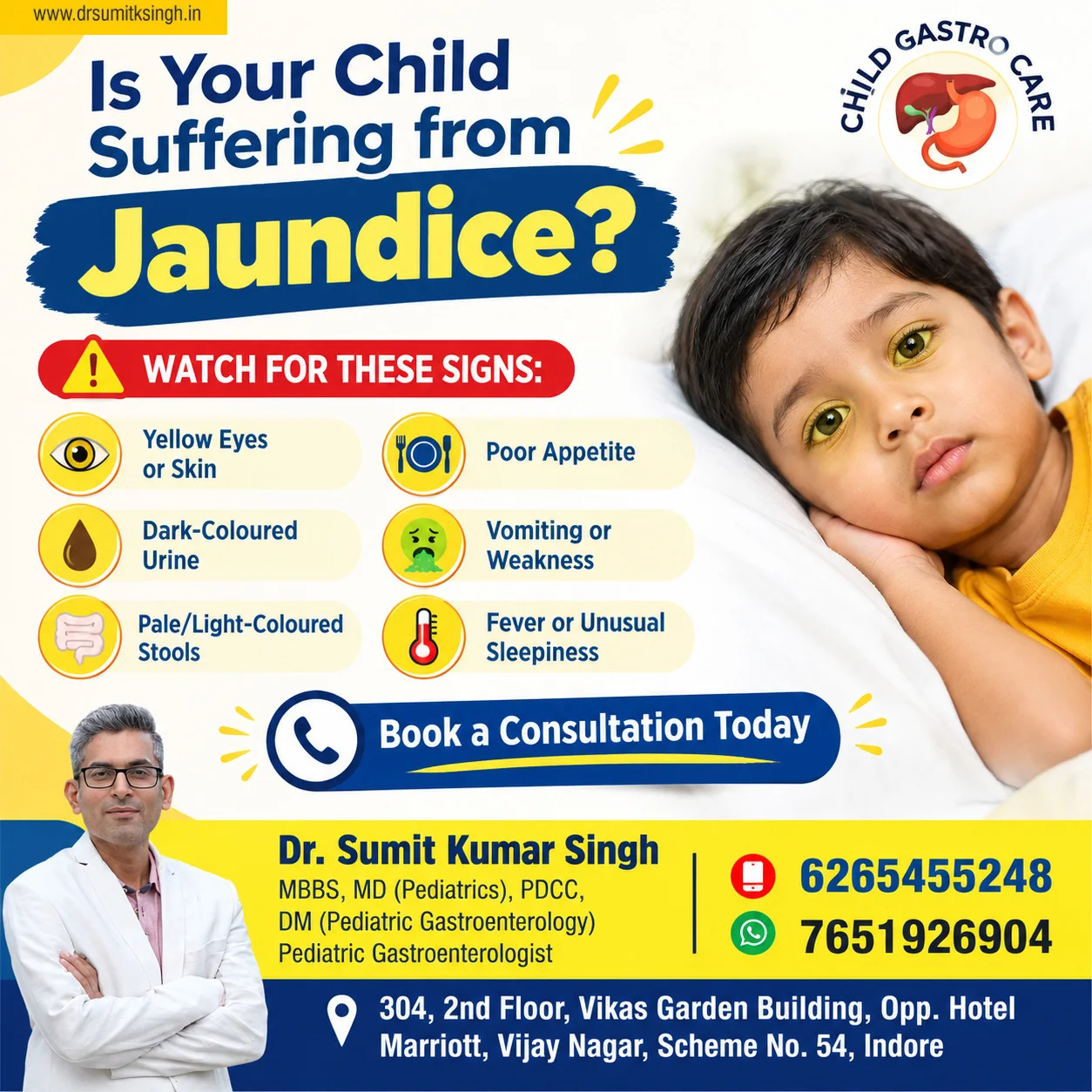
Noticing yellowing in your child’s eyes or skin can be worrying. Parents often wonder whether it is related to feeding, an infection or a liver problem. The important first step is to arrange medical assessment rather than assume that every case needs the same medicine.
Jaundice treatment for children in Indore depends on the child’s age, bilirubin levels and the underlying cause. Some newborns need observation and feeding support, while others require phototherapy or further investigation. Jaundice in an older child also needs evaluation to identify the reason.
For a consultation, contact Dr. Sumit Kumar Singh to enquire about appointment availability and discuss your child’s symptoms. If your child appears seriously unwell, seek emergency care immediately.
What Is Jaundice in Children?
Jaundice in children is yellowing caused by a build-up of bilirubin, a substance produced when red blood cells break down. The liver processes bilirubin so the body can remove it.
Jaundice is a sign rather than a single diagnosis. Possible causes include difficulties processing bilirubin, increased breakdown of blood cells, infections and problems with bile flow. Identifying the cause is essential because treatment approaches differ.
When speaking with a doctor, mention when the yellowing began and whether it is increasing. Information about feeding, activity, urine and stool colour can help guide the assessment.
When Does Jaundice Need Urgent Attention?
Emergency Signs in Babies
A baby with jaundice needs immediate medical attention if:
Do not wait for a routine appointment when these signs are present.
Warning Signs in Older Children
Jaundice accompanied by confusion, altered behaviour, unusual sleepiness or unexplained bleeding requires urgent hospital assessment. These can occur with serious liver illness and should not be managed through home remedies.
Pale or chalky stools and dark urine also warrant prompt medical review, particularly in infants. A baby may appear otherwise well despite an important liver or bile-flow problem.
How Is Newborn Jaundice Different?
Newborn jaundice is common because the baby’s liver is still becoming efficient at clearing bilirubin. Many cases are mild, but appearance alone cannot establish whether the bilirubin level is safe.
Doctors interpret bilirubin measurements alongside the baby’s age in hours, prematurity and other risk factors. Some babies need an earlier follow-up after discharge, especially when feeding is not going well or bilirubin is already elevated.
Persistent jaundice should not simply be labelled as a breastfeeding issue without assessment. Let the doctor know if yellowing continues beyond two weeks, or three weeks in a premature baby. Seek review sooner for worsening symptoms, pale stools or dark urine.
What Can Cause Jaundice in Older Children?
An older child may develop jaundice from infections such as viral hepatitis, blood-cell disorders or conditions affecting bilirubin processing and bile drainage. Some causes are relatively mild; others need specialist treatment.
For example, hepatitis A in children may cause tiredness, poor appetite, vomiting, abdominal discomfort, darker urine and yellow eyes. However, these symptoms do not confirm hepatitis A without assessment and appropriate testing.
Avoid deciding the cause based on another child’s experience. Tell the clinician about recent illnesses, travel, medicines, supplements and any family history of liver or blood disorders.
What Tests May Be Recommended?
The investigation plan depends on the examination and clinical history. Bilirubin testing measures the level in the blood; in newborns, a skin-reading device may also be used as part of assessment. Additional investigations may be needed when infection or liver disease is suspected.
For persistent infant jaundice, measuring both total and direct bilirubin helps distinguish different patterns. Abnormal stool or urine colour makes timely investigation particularly important.
If a bile-duct problem is suspected, blood tests and an ultrasound may be part of the work-up. An ultrasound alone cannot confirm or exclude every condition; suspected biliary atresia may require further specialist investigations.
Ask what each test is intended to clarify and when the results should be reviewed.
How Is Jaundice Treated?
Newborn Monitoring and Phototherapy
Some babies need close follow-up rather than active treatment. When indicated, phototherapy for newborn jaundice uses controlled light to help the body eliminate bilirubin. Rarely, severe cases require more intensive hospital treatment.
The decision depends on measured levels and the baby’s clinical circumstances, not skin colour alone.
Treatment Directed at the Cause
For uncomplicated hepatitis A, care generally focuses on hydration, nutrition, rest and monitoring. There is no specific antiviral treatment for hepatitis A, but severe illness may require hospital care.
Other diagnoses need different management. For example, biliary atresia is a serious infant bile-duct condition treated surgically; it cannot be corrected with phototherapy or a general “jaundice tonic.” Early specialist treatment matters.
Feeding, Food and Medicines During Recovery
For a newborn, ask the treating team to assess feeding and help with any breastfeeding difficulties. Do not stop breastfeeding or introduce supplements solely because someone notices yellow skin; feeding changes should follow individual medical advice.
For an older child with hepatitis A, suitable fluids and balanced food support recovery. Discuss vomiting, poor intake or difficulty maintaining hydration with the clinician. Avoid adding medicines, herbal preparations or supplements without checking, as some can harm the liver.
Sunlight is not a safe substitute for prescribed phototherapy. It can expose babies to overheating and sunburn, and should not be used as home treatment for jaundice.
Preparing for a Pediatric Liver Consultation in Indore
For a pediatric liver consultation in Indore, bring information that helps reconstruct the illness clearly:
Parents travelling from Vijay Nagar, Palasia or elsewhere in Indore should confirm the appointment location and available timings. If symptoms become urgent, go to the nearest appropriate emergency department instead of delaying care for a preferred consultation.
Useful questions include: What is the likely cause? Does the child need admission? When should tests be repeated? Which symptoms should trigger an earlier review?
Why Follow-Up Matters
Keep the recommended review even if the child’s colour seems to improve. Skin colour alone is not a reliable way to assess bilirubin levels or decide that monitoring is complete.
Maintain reports in date order and write down any changes between visits. Ask for clear instructions about medicines, feeding and the next appointment. If different caregivers look after the child, share the same written plan with them.
For school-age children, discuss return to classes and normal activities with the treating doctor.
Frequently Asked Questions
1. Is every case of jaundice a liver infection?
No. Jaundice can have several causes, including blood-cell breakdown and bile-flow problems. Examination and selected tests help identify the diagnosis.
2. Can sunlight replace phototherapy for my baby?
No. Home sun exposure is not a safe replacement for controlled medical phototherapy. Follow the treatment and monitoring plan prescribed for your baby.
3. Should pale stools be checked even if my baby feeds well?
Yes. Pale, chalky or unusually light stools need prompt assessment. Babies with early liver disease can sometimes feed well and appear healthy.
4. How long will treatment take?
There is no single recovery period for all children. The cause, severity and response to care determine follow-up needs. Ask the clinician for an estimate based on your child’s diagnosis and results.
Arrange an Assessment for Your Child
Yellowing of the eyes or skin deserves attention, particularly when accompanied by feeding changes or unusual stool colour. A clear diagnosis helps families understand the treatment plan and the signs to monitor.
For jaundice treatment for children in Indore, contact Dr. Sumit Kumar Singh to enquire about a consultation and review of your child’s reports. Emergency symptoms require immediate hospital care.
Contact Us today to discuss appointment availability and the next steps for your child’s assessment.
| Tags: | #Jaundice Treatment for Children in Indore |


